What to Do After a Car Accident in Maryland or Delaware: A Local Driver’s Guide
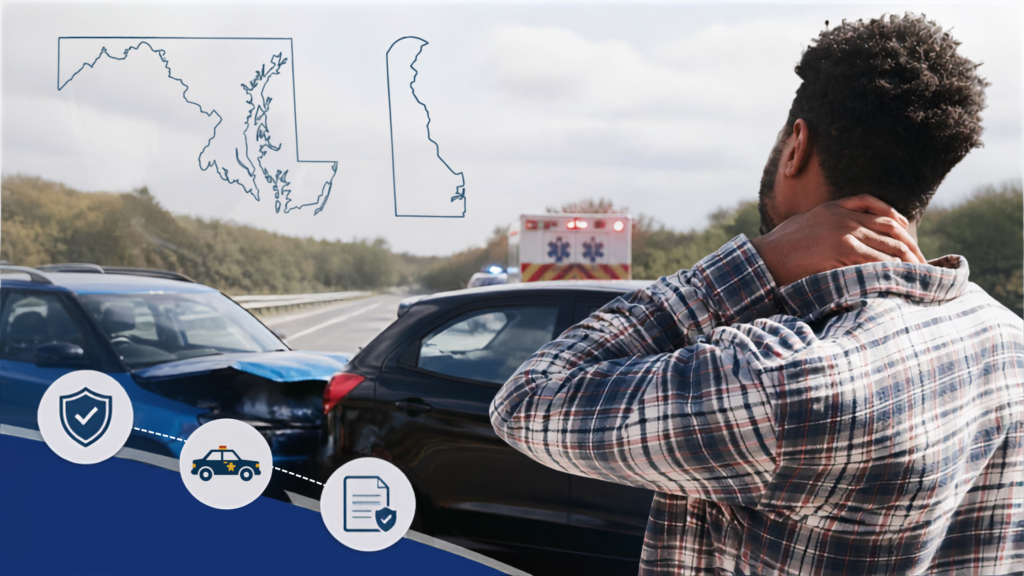
A car accident can happen in seconds. What you do afterward can affect your safety, insurance claim, and ability to get your vehicle repaired.
It is important to understand that state laws regarding accidents are not identical. As a collision repair shop in Cecil County, Maryland, near the Delaware state line, we created this guide to help local drivers understand what to do after an accident in either state. The steps you need to take can depend on where the accident occurred, whether anyone was injured, and how much property damage occurred.
We explain what to do after a car accident in Maryland or Delaware, including when an accident must be reported, what information you should collect, how insurance fits into the process, and what to do with your damaged vehicle.
This information is particularly useful for drivers traveling throughout Cecil County, Maryland, and New Castle County, Delaware, where crossing the state line is a normal part of everyday driving.
Note: This guide provides general information and is not legal advice. Laws and individual circumstances can vary. Consult the appropriate state agency or a qualified attorney if you have questions about your specific situation.
1. Stop and Check for Injuries
Your first priority after a collision should be safety.
Stop your vehicle and determine whether you, your passengers, or anyone else involved has been injured. If someone needs emergency medical attention, call 911.
Do not leave the scene of an accident without first fulfilling your legal responsibilities.
In Maryland, drivers involved in accidents resulting in injury or death must stop as close as possible to the scene and remain there while fulfilling the requirements established under state law. Maryland also requires drivers to provide reasonable assistance to an injured person.
Delaware law similarly requires drivers involved in collisions causing injury or death to stop and provide reasonable assistance to injured people, including contacting appropriate emergency or law enforcement personnel when necessary.
2. Move Your Vehicle Out of Traffic When Appropriate
If no one is injured and your vehicle can safely be moved, getting it out of active traffic may help prevent another collision.
However, whether you should move the vehicle can depend on the circumstances.
Delaware law specifically states that after a driver has reasonably determined that there are no injuries or deaths, a damaged vehicle obstructing traffic should be moved when reasonably possible so it does not unnecessarily interfere with traffic.
Maryland law requires drivers involved in property-damage-only accidents involving attended property to stop as close as possible to the scene without obstructing traffic more than necessary.
If you are uncertain whether it is safe or appropriate to move your vehicle, follow instructions from police or emergency personnel.
3. Report the Car Accident if necessary
Do You Have to Report a Car Accident in Delaware?
This is where knowing the law becomes especially important.
Under Delaware Code Title 21, § 4203, a driver must immediately report a collision to the police agency with primary jurisdiction when:
- Someone is injured or killed.
- The collision occurs on a public highway and causes apparent property damage of $2,000 or more.
- The collision appears to involve a driver whose physical ability is impaired by alcohol, drugs, or a combination of them.
Drivers can also report collisions that do not meet these mandatory reporting conditions.
Don’t underestimate the cost of seemingly minor damage
The $2,000 threshold is important for Delaware drivers.
A collision may look minor at the scene, but what appears to be a damaged bumper could involve components you cannot see from outside the vehicle.
Modern bumpers may also be associated with cameras, sensors, wiring, mounting components, and other systems. As a result, it may be difficult for a driver standing on the side of the road to know the true cost of the damage.
When in doubt about your reporting responsibilities, contact the appropriate police agency rather than trying to estimate the repair cost yourself.
Do You Have to Report a Car Accident in Maryland?
Maryland’s requirements are different from Delaware’s, so drivers should not assume the same $2,000 rule applies after crossing the state line.
Under Maryland Transportation § 20-104, a driver involved in an accident resulting in bodily injury, death, or damage to attended property must provide certain identifying information and render reasonable assistance to anyone injured.
If a police officer is not present and the people entitled to receive that information are not in a condition to receive it, the driver must immediately report the accident to the nearest office of an authorized police authority after fulfilling the other applicable requirements.
Maryland also has a separate written reporting requirement for accidents involving injury or death.
Under Maryland Transportation § 20-107, a driver involved in an accident resulting in bodily injury or death generally must submit a written report to the Motor Vehicle Administration within 15 days and provide evidence of required insurance or other security.
However, that written report is not required if a police officer investigated the accident and the officer’s report was filed with the Department of State Police. The statute also provides an exception when the person is physically incapable of making the report.
Because reporting obligations depend on what happened, contact the appropriate Maryland law enforcement agency if you are unsure whether your particular accident needs to be reported.
When in Doubt, Report the Accident
If you are unsure whether an accident meets your state’s reporting requirements, it is better to contact the appropriate law enforcement agency and ask. Damage and injuries are not always obvious immediately after a crash, and reporting requirements differ. Police can advise you on what steps to take based on the circumstances and location of the accident.
4. Exchange Information With the Other Driver
Once immediate safety concerns have been addressed, exchange information with the other driver.
Maryland law requires drivers involved in qualifying accidents to provide their:
- Name
- Address
- Vehicle registration number
Drivers must also exhibit their driver’s license upon request, if available.
Delaware similarly requires a driver involved in a collision resulting in property damage to provide their name, address, and vehicle registration number and to show a driver’s license or other documentation of driving privileges.
For practical purposes, you should also collect relevant insurance information.
It can be helpful to record:
- Driver’s full name
- Contact information
- Insurance company
- Policy information
- License plate number
- Vehicle make and model
- Driver’s license information when appropriate
- Contact information for witnesses
Avoid relying on memory. Write the information down or save it securely on your phone.
5. Take Photos of the Accident Scene
If it is safe to do so, document the accident before leaving the scene.
Take clear photographs of:
- Damage to your vehicle
- Damage to the other vehicle
- All sides of both vehicles
- License plates
- Vehicle positions
- Road markings
- Traffic signs and signals
- Debris
- Skid marks, if present
- Road and weather conditions
- The surrounding accident scene
It can also help to take both close-up and wider photographs. Close-ups document individual areas of damage, while wider images provide context about where and how the vehicles came to rest.
Do not put yourself in danger to take a photograph. Avoid standing in active traffic or another unsafe location.
6. Notify Your Insurance Company
Once everyone is safe and you have handled any necessary reporting, contact the appropriate insurance company.
Exactly how the claim proceeds will depend on the circumstances of the accident, available coverage, fault determinations, your policy, and state law.
When starting the claim, have as much information available as possible, including:
- Date and time of the accident
- Accident location
- Other driver’s information
- Police report information, if available
- Photos and videos
- Description of the accident
- Description of the vehicle damage
You should also review your deductible and applicable coverage.
The Maryland Insurance Administration explains that a deductible is the amount you agree to be responsible for when your vehicle is damaged before your insurer makes payments under applicable coverage.
The Delaware Department of Insurance’s Auto Insurance Guide similarly advises consumers to check their deductible after an accident and explains that the insurer may assign an adjuster to estimate the vehicle damage and determine what it will pay toward covered repairs.
7. Know That You Can Choose a Collision Repair Shop
Your insurance company may suggest a collision repair facility. That does not necessarily mean you have to use it.
In Maryland, the Maryland Insurance Administration states that drivers are not required to use a specific auto body repair shop and may have the vehicle repaired at the shop of their choice.
Delaware’s Department of Insurance also states that the final choice of repair shop belongs to the vehicle owner. Its consumer guide notes, however, that choosing a shop whose estimate is higher than the insurer’s estimate could leave the customer responsible for a difference unless the additional amount is justified and agreed upon.
When selecting a collision repair shop, consider more than price.
Look at factors such as:
- Technician training
- Industry certifications
- Experience with modern vehicle systems
- Repair procedures
- Reputation
- Quality control
- Communication throughout the repair
The objective after an accident is not simply to make your vehicle look better. You want to understand what was damaged and what is required to repair it properly. Purnell Body Shop is a trusted collision repair provider in the region, known for quality workmanship, careful attention to detail, and exceptional customer service.
8. Don’t Assume Minor Visible Damage Means Your Vehicle Is Fine
A small dent or cracked bumper does not always tell the entire story.
Some collision damage is obvious. Other damage may be hidden behind exterior panels and components.
After an impact, a professional inspection may reveal issues involving:
- Bumper components
- Mounting points
- Body panels
- Structural components
- Suspension
- Wheel alignment
- Lights
- Wiring
- Cameras
- Parking sensors
- Advanced driver assistance systems (ADAS)
You may also notice symptoms after leaving the accident scene.
Pay attention if your vehicle:
- Pulls to one side
- Has a new vibration
- Makes an unfamiliar noise
- Displays warning lights
- Has steering problems
- Has doors, the hood, or the trunk that no longer close normally
- Has lights or driver-assistance features that are not functioning correctly
If you have any reason to believe the vehicle is unsafe, do not continue driving it simply because it can still move. Arrange for professional assistance or towing instead.
9. What Happens If More Damage Is Found During Repairs?
An initial insurance estimate is not always the final repair amount.
Some damage cannot be fully identified until a collision repair technician removes damaged exterior parts and examines what is underneath.
If additional accident-related damage is discovered, the collision repair facility may document it and submit a supplemental estimate to the insurer.
The insurer can then review the additional damage and determine what is covered under the claim.
This is one reason communication between the vehicle owner, collision repair facility, and insurance company is important throughout the repair process.
10. Keep Your Accident Documents Together
A collision can generate a surprising amount of paperwork.
Create a physical folder or digital folder and keep relevant information together.
Consider saving:
- Police report or incident number
- Photographs
- Other driver’s information
- Witness information
- Insurance claim number
- Insurance correspondence
- Repair estimates
- Towing receipts
- Rental vehicle documentation
- Repair invoices
- Other accident-related receipts
Good recordkeeping makes it much easier to find information when an insurer, repair facility, or another party requests it.
What If You Hit a Parked Car?
Do not simply drive away because nobody is inside the other vehicle.
Maryland has specific requirements for accidents involving unattended property.
Under Maryland Transportation § 20-105, a driver who damages an unattended vehicle or other unattended property must stop and attempt to locate the driver, owner, or person responsible for it.
If that person cannot be found, the driver must leave written notice in a conspicuous and secure place providing the information required by the statute, including identifying and vehicle information.
Delaware also imposes duties following collisions involving property damage. Drivers must stop and provide identifying information to the owner of the property or the driver or occupants of the vehicle involved. Delaware’s accident statutes contain additional provisions addressing collisions involving unattended vehicles and property. See Delaware Code, Title 21, Chapter 42 for the applicable requirements.
Get Help With Collision Repairs After an Accident
Once everyone is safe, the necessary reports have been made, and your insurance claim is underway, the next concern is getting your vehicle back on the road.
Our collision repair team serves drivers throughout Cecil County, Maryland, New Castle County, Delaware, and surrounding communities. We can assess the visible and underlying collision damage, develop a repair plan, and work through the repair process with you.
If you’ve been in an accident in Maryland or Delaware, contact us today to schedule an estimate and take the next step toward getting your vehicle repaired.
